
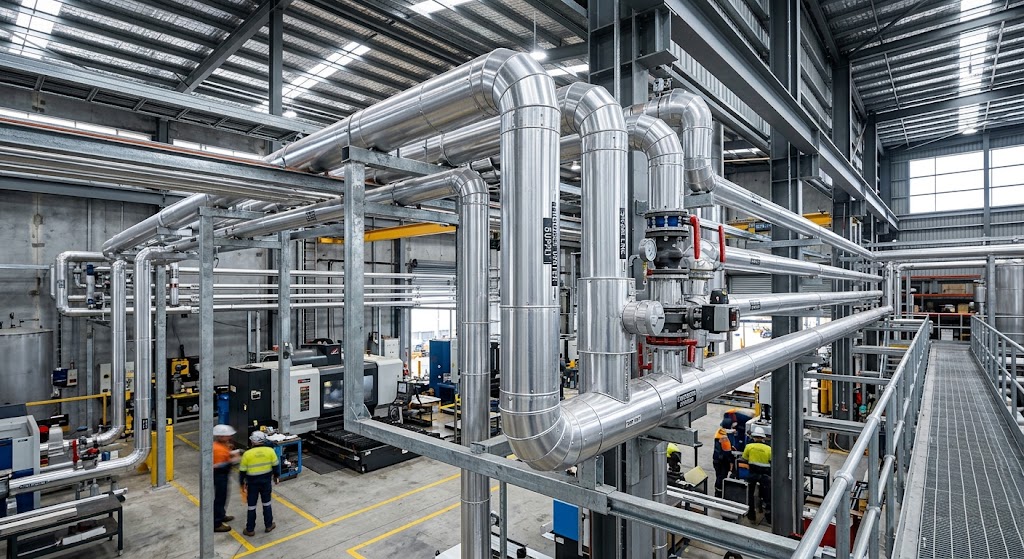
Thermal energy management in heavy industrial environments is an ongoing balancing act. Every metre of piping conveying steam, hot water or chilled fluids represents either an efficiently managed resource or an expensive thermal energy leak. When we work with plant managers, we frequently find that modest gaps in thermal protection result in significant declines in total plant efficiency. Investing in high-performance pipe insulation is one of the most effective strategies to stop these hidden energy leaks and protect vital operational budgets.
Different applications necessitate completely different approaches to thermal confinement. For high-temperature steam lines, using durable materials such as mineral wool pipe sections or ultimate mineral wool keeps the heat where it belongs while protecting staff from accidental burns. On the other hand, cryogenic and chilled lines require strict vapour management to prevent condensation buildup. If moisture penetrates the barrier surrounding cold pipes, it can cause significant corrosion beneath insulation, silently degrading metal infrastructure from the outside in.
Traditional pipe supports are a common source of problems on industrial sites. Standard wooden blocks frequently crush or shift over time, undermining both the thermal barrier and the continuous vapour seal. To address this, we propose for innovative high-performance pipe supports that retain structural integrity while keeping the insulation envelope intact. This easy improvement addresses common weak points that cause condensation and energy loss.
Aside from structural supports and exterior cladding, valve boxes and specialised fitting covers provide an important line of defence in complicated piping networks. Uninsulated valves and duct mezz flanges frequently operate as major thermal bridges, releasing large amounts of heat and generating heavy condensation in humid settings. We routinely provide custom-fabricated insulating jackets for these problematic geometry locations, ensuring that the entire system has a consistent thermal profile from end to end.
Another important element to consider during installation is the long-term chemical compatibility of the pipe surface and the insulating material. Certain locations, especially those near coastal areas or chemical processing factories, contribute corrosive substances that might hasten material deterioration. Selecting the appropriate vapour barriers and adhesive solutions keeps aggressive compounds from damaging the substrate, protecting your capital investment from premature failure.
Protecting these devices from physical harm and harsh weather is as critical as the initial installation. To prevent environmental degradation, outside lines exposed to rain, wind and harsh sunlight require long-lasting outer jackets, such as aluminium or stainless steel cladding. Insulpro stocks a wide range of speciality goods designed to endure harsh industrial environments. By taking a complete approach to thermal management, at Insulpro we assist our clients in conducting their operations smoothly, safely, and efficiently.